Description
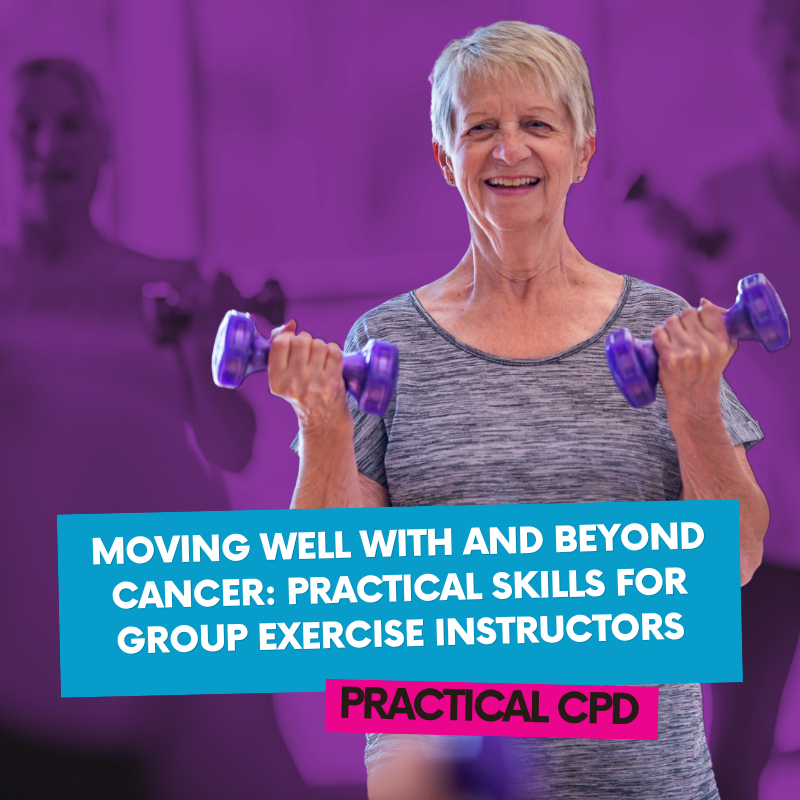
Cancer touches many lives, and instructors may increasingly welcome class members who are living with cancer, recovering from treatment, rebuilding strength after surgery, or adjusting to life beyond cancer. This practical CPD helps instructors understand how cancer and cancer treatment may affect movement, energy, confidence and participation in class.
You’ll explore the broad relationship between cancer, treatment, physical activity and quality of life, including how appropriate movement can support strength, balance, flexibility, mood, confidence, heart health and bone health for many people affected by cancer.
The CPD will cover common cancer-related side effects that may affect class participation, including fatigue, pain, reduced strength, balance changes, breathlessness, peripheral neuropathy, lymphoedema risk, bone health, anxiety and loss of confidence.
The focus is on safe, general exercise support, not cancer rehabilitation. You’ll learn how to adapt seated and standing exercises, use pacing and the talk test, support people with fluctuating symptoms, and recognise when someone needs medical guidance before continuing or increasing activity.
This CPD also explores compassionate, person-centred communication so by the end of the session, instructors will feel more confident creating a welcoming, adaptable and safe class environment for people affected by cancer, while staying clearly within scope and knowing when to signpost to healthcare professionals, Macmillan, Cancer Research UK, specialist cancer exercise services or other appropriate support.
What instructors will get from the CPD
By the end of the session, learners will be able to:
- understand the broad relationship between cancer, cancer treatment, physical activity and quality of life
- explain the difference between general exercise support and cancer rehabilitation
- recognise what is outside a group exercise instructor’s scope
- understand common cancer-related side effects that may affect class participation
- adapt exercises for reduced stamina, treatment-related fatigue, mobility changes, surgery history and fluctuating symptoms
- use simple monitoring tools such as the talk test, RPE and symptom-led pacing
- support participants with fatigue without encouraging them to “push through”
- recognise when lymphoedema risk, peripheral neuropathy or bone health concerns may require extra caution or signposting
- understand why metastatic bone disease is a key safety consideration
- identify red flags and situations where medical advice is needed
- use supportive, person-centred language that builds confidence
- offer seated and standing options without making participants feel singled out
- know when and how to signpost to healthcare professionals or trusted cancer support organisations
- create a welcoming class environment that supports confidence, consistency, enjoyment and social connection
CPD Dates:
Online – Saturday 30th January 2027
Online – Saturday 27th February 2027
Online – Saturday 18th September 2027
The training day is 10am-4pm.
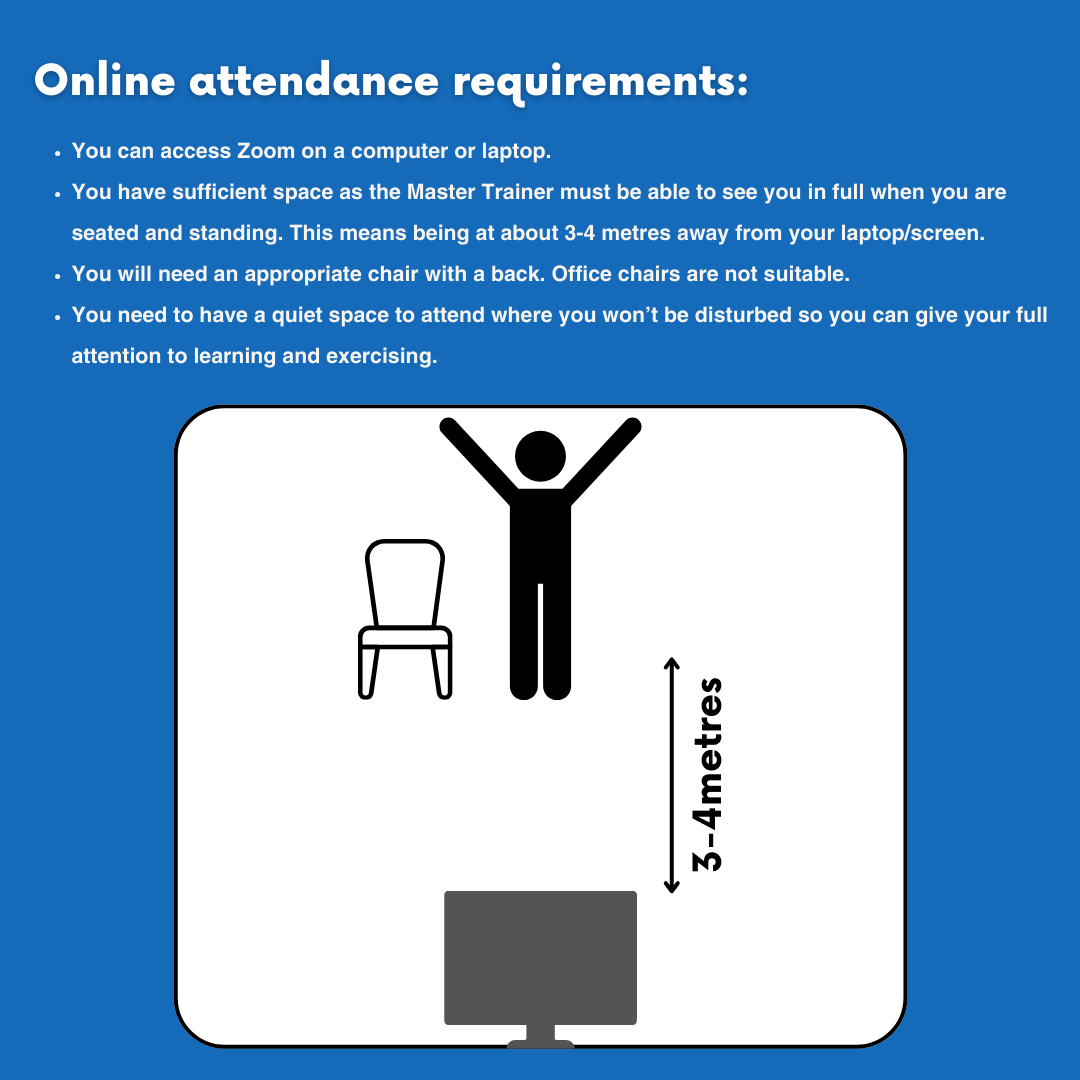
For the online CPD day, we will use Zoom (please check your system requirements here) to deliver these CPDs so you will require a stable internet connection. Please read the requirements for completing your practical CPD online here. By booking an online date, you’re accepting you will meet the requirements outlined.
Please ensure you wear appropriate clothing and footwear to participate – trainers are recommended.
Please note by booking onto the CPD, you agree to these terms and conditions.
Discounted instructor rate is available to currently licensed Move it or Lose it® instructors only. Licence status will be verified prior to the event.
Reviews
There are no reviews yet.