Every Movement Counts: How to Build More Activity into Everyday Life

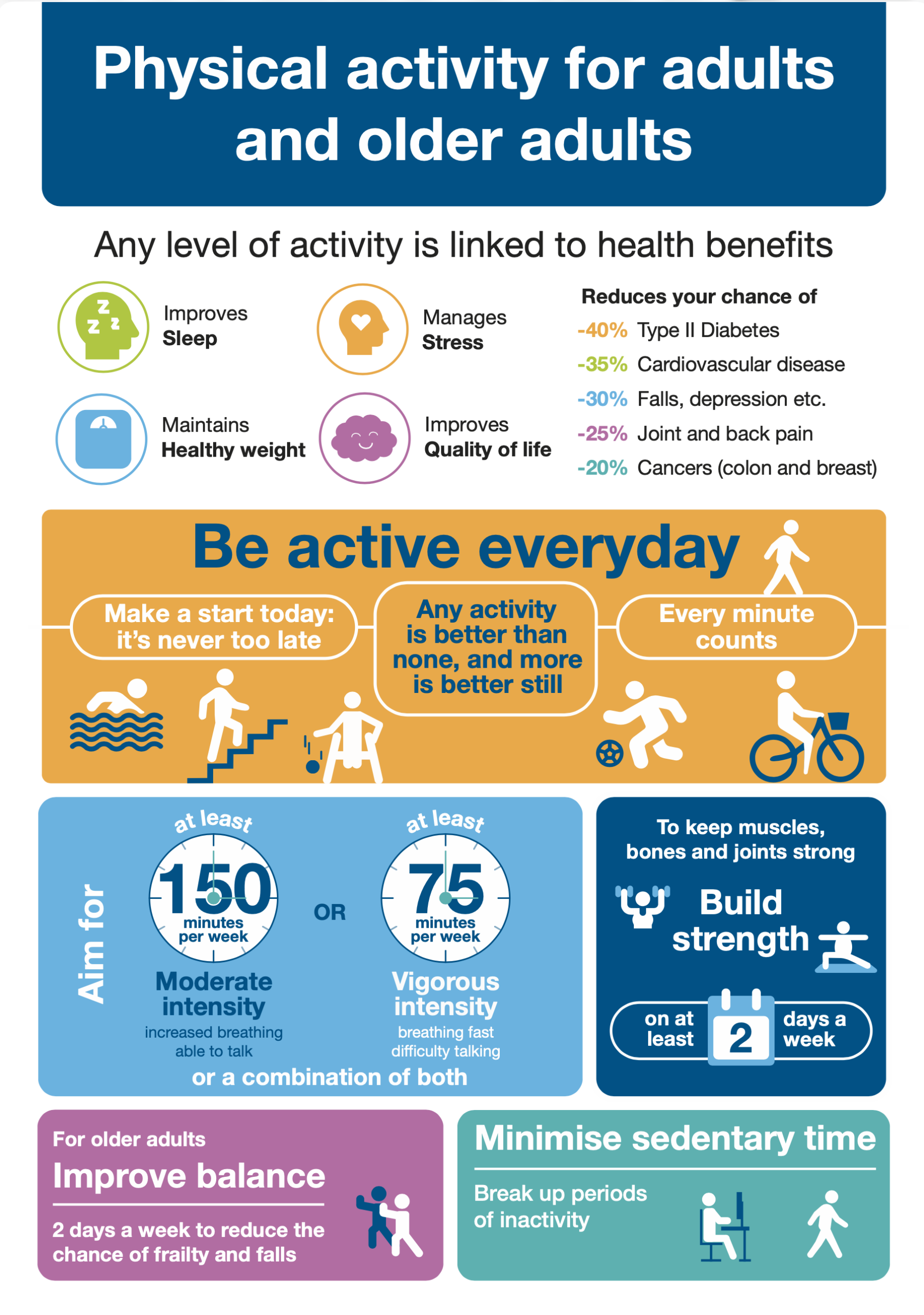
The latest UK physical activity guidelines (released 10th July 2026) bring a really positive message for older adults: every movement counts.
You do not need to spend hours in the gym, run long distances or complete a full workout every day to improve your health. Small amounts of movement, built into everyday life, can make a meaningful difference, especially for anyone who is currently inactive or finding it difficult to get started.
The guidelines encourage adults aged 65 and over to be active every day, work towards 150 minutes of moderate activity each week, include strength and balance activities at least twice a week, and break up long periods of sitting.
But importantly, this is not an all-or-nothing target. Doing something is always better than doing nothing, and even small increases in activity can support your health, confidence and independence.
Daily activities could include:
These short bursts of movement all add up across the day and week. This is often described as exercise snacking, taking small, manageable “snacks” of movement throughout the day, which can feel much more achievable.
Strength and balance matter at every age
The updated guidance continues to emphasise the importance of activities that strengthen muscles and improve balance. Strong muscles help us to stand up from a chair, climb stairs, carry shopping, walk confidently and continue doing the things we enjoy. Balance exercises can help us feel steadier and more confident when moving around, while flexibility supports comfortable everyday movement.
These are not just exercises for people who have already experienced a fall or noticed a loss of strength. They are important for everyone who wants to stay active and independent as they get older.
Sitting less can make a difference
Many of us spend long periods sitting, whether we are watching television, reading, using a computer or travelling. The updated guidance encourages us to break up these periods whenever possible.
This does not mean you need to go for a walk every time you stand up. Simply moving your feet, stretching your arms, standing safely for a moment or completing a few seated exercises can help break up sedentary time.
Seated exercise is still exercise. You can raise your heart rate, strengthen your muscles and improve your mobility while sitting in a chair. The important thing is to keep moving in a way that feels safe and manageable for you.
How Move it or Lose it can help
At Move it or Lose it, we have always believed that exercise should be enjoyable, accessible and suitable for real life. Our aim is not to make people feel pressured by targets. It is to help older adults find simple and enjoyable ways to move more often, maintain their strength and confidence, and stay connected with others.
Join a local class
Move it or Lose it classes combine aerobic activity, strength, balance, flexibility and coordination exercises. The exercises can be completed seated or standing, which means participants can work at a level that suits their ability.
Classes also offer something that is just as important as the exercise itself: friendship, encouragement and the motivation that comes from moving together. Classes can provide a strong foundation, while instructors can also suggest simple exercises to practise between sessions.
Exercise at home with the Online Club
For anyone who cannot always get to a class, or who would like to be more active between classes, the Move it or Lose it Online Club offers a flexible way to exercise at home.
Members can choose from seated and standing sessions and take part in live classes or exercise at a time that suits them which makes it easier to add more movement into the week.
Try a Cuppa Routine
Waiting for the kettle to boil is the perfect opportunity to move. Our Cuppa Routine turn a few spare minutes into a simple movement break. You might march on the spot, mobilise your shoulders, practise heel raises or complete a few gentle strength exercises.
It may only take a few minutes, but repeated regularly, these small activities can help create lasting habits.
Add exercise snacks to your day
Exercise snacks are short bursts of movement that can be completed throughout the day.The best way to remember is to link exercise snack with another regular habit such as brushing your teeth, or when adverts come on the TV. Our exercise snacks tea-towel also acts as a prompt to nudge you into action.
You could try:
The best exercise snack is one that feels manageable enough to repeat.
Follow our YouTube exercises
The Move it or Lose it YouTube channel includes a wide range of free exercise videos designed especially for older adults. These include sessions for strength, balance, mobility and circulation, as well as short routines that can be fitted easily into the day. You can choose a longer session or simply complete a few minutes when you have time.
Pass it on
Our monthly Pass It On exercises give people another simple way to stay active.
Each month, we share accessible exercises that can be practised at home and passed on to friends, family members or neighbours. It is a reminder that movement does not have to be complicated and that encouraging someone else to join in can make it more enjoyable.
Try our People’s Friend exercises
Our regular articles in The People’s Friend magazine include practical exercises and ideas to help readers stay active in everyday life. These routines are designed to feel approachable and can often be completed at home with very little equipment. They offer another gentle prompt to keep moving, build strength and try something new.
Start with what you can do today
The physical activity guidelines provide helpful targets, but they should not make anyone feel that small efforts are not worthwhile. You do not have to achieve everything at once. You could begin by standing up more often, walking for five extra minutes, joining a weekly class or completing a short exercise video at home. Once that feels comfortable, you can gradually build from there.
The most important thing is to choose movement that you enjoy and can continue doing. A little more movement can lead to a lot more life.
You are never too old, too unfit or too inactive to begin.
At Move it or Lose it, we are here to help you find a way to move that works for you — whether that is through a local class, the Online Club, a short routine at home or a few extra minutes of movement built into your day.
Every movement counts — and every step towards being more active is worth celebrating.