How to Change Careers at 50: It’s Not Too Late

By Julie Robinson, Founder & CEO
When I retrained in my 40s, I knew I needed a pathway that was structured, realistic and supportive. That is exactly why we designed the Move it or Lose it training the way we did.
If you are exploring how to change careers at 50, you need more than inspiration. You need clarity and a clear route forward.
Are you asking yourself:
- How to change careers at 50?
- How do you change careers at 50?
- How do I change careers at 50?
- Can I change careers at 50?
The truth is simple: yes, you can.
A career change at 50 is not only possible. For many people, it is the best decision they ever make.
At 50, you have experience. You have confidence, understand people and you know your strengths. That gives you an advantage.
If you are ready to change direction, this guide will show you how.
Can I Change Careers at 50?
This is the biggest question people ask.
Yes, you can change careers at 50.
You are not starting from zero. You are building on:
- Real life experience
- Working experience
- Communication skills
- Organisation
- Reliability
- Empathy
Many employers and clients value maturity. In community-based roles especially, life experience matters.
How to Change Career at 50: A Simple Plan
If you are wondering how to change career at 50, keep it simple.
1. Get Clear on What You Want
Do you want:
- Flexible working?
- Less stress?
- A better work-life balance?
- A more fulfilling career?
- More time with family and friends?
Clarity gives you direction.
2. Research Practical Options
You do not need to go back to university for three years.
Many people research for a few weeks or even 1 month before making a decision. Some explore options for just 2 weeks and realise they are ready.
Speak to:
- A career coach
- Training providers
- People who have already made the move
Small steps build confidence.
3. Start Gradually
You do not have to quit your job overnight.
Many career changers:
- Train alongside their current role
- Reduce hours slowly
- Build income step by step
This makes switching careers at 50 feel realistic and safe.
How Do You Change Careers at 50 Without a Fitness Background?
Many people assume they need special qualifications or a sporty background.
You do not.
One growing opportunity in the UK is training as an exercise instructor for older adults.
Move it or Lose it trains instructors to deliver structured classes that can be done seated or standing. There is no floor work. The programme focuses on:
- Flexibility
- Aerobic fitness
- Balance
- Strength
It is inclusive and designed to promote functional fitness for older adults.
Many instructors come from healthcare, education, office roles or caring professions. They bring empathy and real life experience — not gym experience.
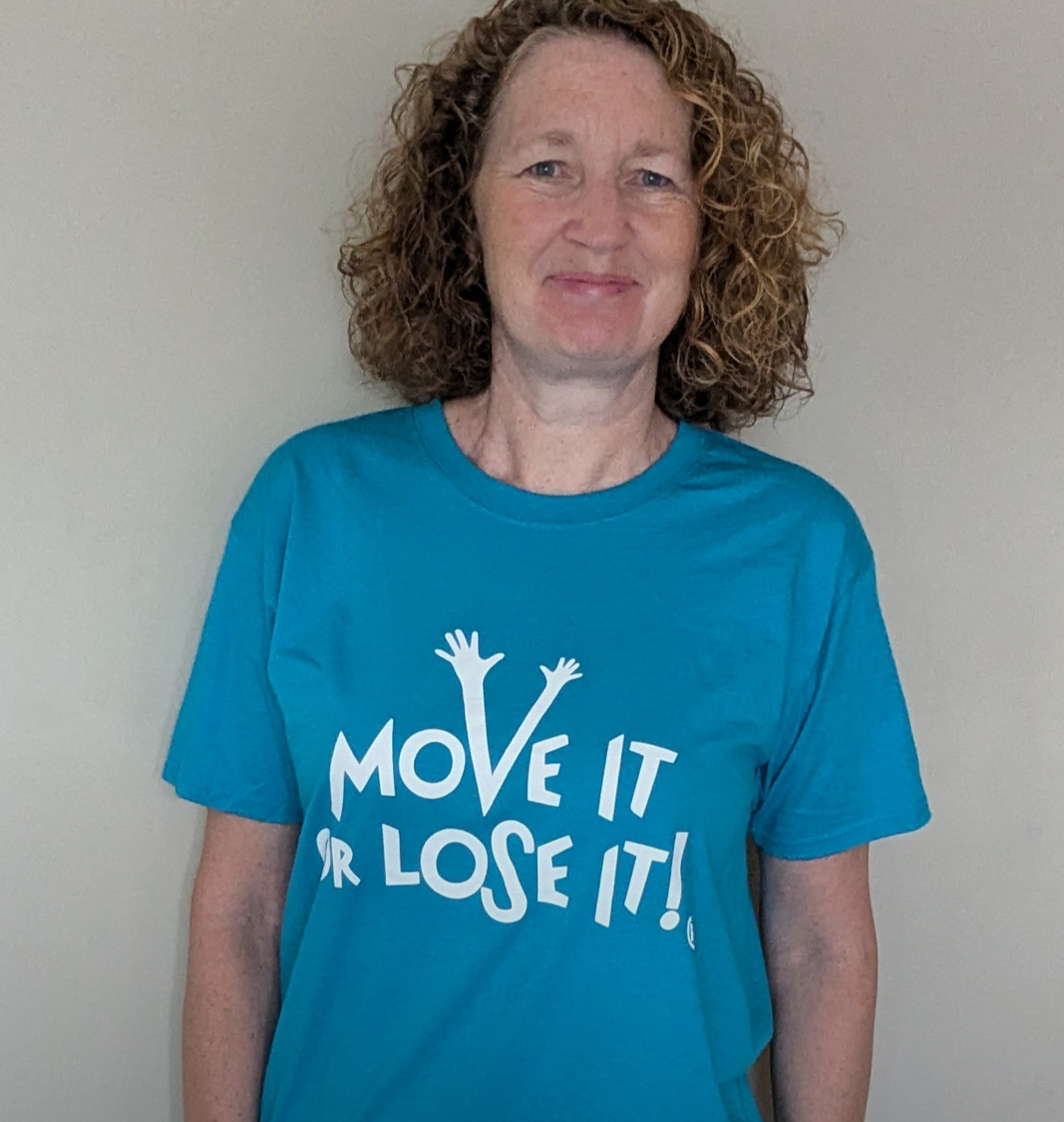 Nicky’s Story: Changing Careers Later in Life
Nicky was working as a healthcare assistant in a GP practice. She often looked for exercise classes to recommend to her patients.
One day, she decided to train as an instructor herself.
She had no background in fitness. Nicky did not attend classes before starting. She simply wanted to help people stay active and independent.
After qualifying, Nicky launched three classes. She felt nervous at first. But her clients supported her. They brought friends. The classes grew.
She watched friendships form. Nicky saw confidence increase. She noticed improvements in mobility and mood.
Four months after qualifying, Nicky left her previous job to focus fully on her new career.
Today, she runs 10 classes a week. Around 135 people attend her sessions.
Her clients tell her:
- They feel stronger
- They feel happier
- They feel more confident
Nicky sees her work as preventative medicine. If she can help prevent falls, reduce isolation or improve wellbeing, she feels she has done her job well.
Her story answers the question: how do I change careers at 50?
You train.
Start small.
Build steadily.
You grow with support.
Career Change at 50 UK: What Are Your Real Options?
If you are considering a career change at 50 UK, you may feel unsure about where to start.
Many people believe you need a degree to succeed. That is not true.
There are many pathways for changing careers at 50 without a degree. What matters most are your transferable skills, not your certificates.
Think about the skills you already use every day:
- Communication
- Organisation
- Leadership
- Planning
- Problem solving
- Reliability
These transferable skills are valuable in many industries.
What Career Path Makes Sense at 50?
At 50, you are not looking for just any job. You want the right career path.
You might be thinking about:
- Starting a new career driving instructor
- Moving into the civil service
- Working from home
- Starting your own business
- Turning a hobby into paid work
Each option has pros and cons.
For example:
- A driving instructor role offers flexibility but requires long hours in a car.
- The civil service offers structure and security but may involve competitive entry.
- Working from home can improve work-life balance but may feel isolating.
The key question is this: what fits your lifestyle, energy and goals?
The Learning Curve Is Not as Steep as You Think
Many people worry about the learning curve when they consider changing careers at 50.
But remember:
The average person in the UK is living longer than ever. With rising average life expectancy, you may still have 15–20 years of working life ahead of you.
That is a long time to stay stuck in a job that no longer suits you.
You are capable of learning new systems, new skills and new routines. You have done it before — many times.
Start a Career That Fits This Stage of Life
At 50, you do not need to chase status. You can focus on purpose.
When you start a career at this stage, you have clarity that younger professionals often lack. You know:
- What drains you
- What motivates you
- What lifestyle you want
- What your dream job really looks like
For some people, the dream job is flexible self-employment.
Whilst for others, it is stability and structure.
For many, it is meaningful community work.
The most important thing is alignment.
Changing Careers at 50 Without a Degree Is Possible
You do not need to go back to university for three years.
Many career changers at 50:
- Take short, focused training
- Build slowly
- Use their existing network
- Grow through referrals
If you already have experience managing people, organising projects or supporting customers, you have a strong foundation.
A career change at 50 UK professionals make successfully is rarely about starting from nothing. It is about using transferable skills in a new way.
Remember
You are not the average person starting from scratch.
You bring decades of experience, resilience and insight.
Changing careers at 50 without a degree is not unrealistic. It is practical. But, choose a career path that values life experience.
And that could be the beginning of your most fulfilling chapter yet.
Is Changing Careers at 50 Risky?
Every change carries some risk. Staying unhappy carries risk too.
You reduce risk by:
- Planning carefully
- Researching thoroughly
- Speaking to a career coach
- Starting part-time
- Growing gradually
Many instructors begin with two or three classes per week. They increase slowly as confidence grows.
A thoughtful plan makes changing careers at 50 manageable.
What Does a Successful Career at 50 Look Like?
A successful career at 50 might mean:
- Flexible working
- Meaningful impact
- Financial stability
- Better health
- More time with family and friends
For some, it means part-time work. For others, it becomes a full-time business.
You define success.
Final Thoughts: How to Change Careers at 50
If you keep asking:
- How to change careers at 50?
- How do you change careers at 50?
- How do I change careers at 50?
- Can I change careers at 50?
The answer is yes — with planning and support.
You are not too old.
You’re not behind.
You are not starting from scratch.
A career change at 50 can lead to a more fulfilling, flexible and rewarding future.
Ready to Start?
If you are looking for a rewarding career that helps older people stay strong and independent, Move it or Lose it could be your next step.
Request your free brochure today and discover how you could train to teach seated and standing exercise classes for older adults — and begin your new career with confidence.
Why Becoming a Move it or Lose it Instructor Is Ideal at 50
If you are serious about how to change careers at 50, you need a pathway that is realistic, structured and supportive.
Move it or Lose it offers exactly that.
The training includes 35 hours of guided learning. You complete the theory in manageable stages, with clear support throughout. Then, you attend two practical face-to-face training days where you practise delivering sessions, build confidence and receive direct feedback.
You are not left to figure things out alone.
The programme teaches you how to deliver safe, structured exercise sessions that can be done seated or standing, with no floor work. It focuses on flexibility, aerobic fitness, balance and strength — all essential for older adults.
Once qualified, you can become self-employed and run your own classes. You choose:
- How many sessions you deliver
- Where you work
- When you work
- How quickly you grow
You are your own boss.
But you are not on your own.
As a licensed instructor, you join a wider team. You gain access to a strong support network, marketing guidance, business advice and experienced colleagues around you. You become part of a recognised national brand with shared values and shared standards.
This balance is powerful.
You enjoy the independence of self-employment, with the reassurance of a professional community behind you.
For many people changing careers at 50, that combination of flexibility, structure and support makes all the difference.
And it could make all the difference for you too.